US Pharm. 2012;37(7):23-26.
Obstructive sleep apnea (OSA) is a form of sleep-disordered breathing that is characterized by frequent episodes of snoring and a cessation in breathing for greater than 10 seconds, resulting in disrupted sleep.1 It has an estimated prevalence of 3% to 7% in males, 2% to 5% in females, and up to 78% in morbidly obese patients. OSA results from decreased motor tone of either the tongue or airway dilator muscles, causing complete or partial obstruction of the upper airway during sleep.1,2 Patients with OSA frequently suffer from daytime sleepiness and reduced quality of life, as well as cardiac, metabolic, and psychiatric disorders. OSA affects people of all ages and is most prominent in middle-aged obese males, with a higher incidence as age increases. Obesity is the primary risk factor and contributes to the other disorders commonly diagnosed in this population.3
Symptoms and Diagnosis
Untreated OSA is an independent risk factor for increased comorbidities, making it imperative to evaluate common signs and symptoms such as disruptive snoring, daytime sleepiness, obesity, and large neck circumference (>42 cm in men).1,4 Diagnostic criteria for OSA include either an apnea-hypopnea index (AHI) of greater than five events per hour plus symptoms of excessive daytime sleepiness or an AHI greater than 15 events per hour regardless of symptoms. Overnight polysomnography is required to measure the frequency of apneic and hypopneic events.
OSA is independently associated with disorders of the cardiovascular, endocrine, and central nervous systems. A study by Peppard et al examined the association between OSA and hypertension.5 The investigators found OSA to be an independent risk factor for hypertension, and that treatment with continuous positive airway pressure (CPAP) improved blood pressure. A prospective study by Marin et al found that untreated OSA increased the odds by 2.87 for a fatal and 3.17 for a nonfatal cardiovascular event.6 Studies have found a relationship between OSA and increased incidence of stroke (hazard ratio 2.86-3.56) and a prevalence of seizures in 10% to 45% in patients with OSA.7,8 Central nervous system (CNS) disorders result from the fatigue and hypersomnolence associated with OSA.1 Patients with OSA frequently develop insulin resistance that leads to a diagnosis of diabetes. Studies have confirmed that patients with moderate-to-severe OSA are likely to have an elevated fasting glucose level and 2-hour glucose tolerance.9,10
Treatment Options
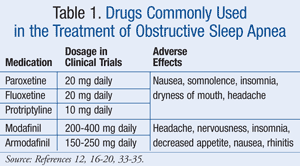
Current treatment options for OSA include both non-pharmacologic and pharmacologic modalities (TABLE 1). CPAP is the treatment of choice, eliminating episodes of apnea and hypopnea by maintaining airway patency and creating a pneumatic splint.11,12 Patient compliance with CPAP is estimated at 40% to 60% secondary to the cumbersome equipment required for therapy. Alternative therapies include weight loss, oral appliances, surgery, and drug treatment. Treatment goals include reducing risk factors for OSA, correcting underlying metabolic disorders, treating the consequences, and preventing episodes of apnea and hypopnea.12
Tricyclic Antidepressants: It is thought that tricyclic antidepressants (TCAs) improve OSA by increasing rapid eye-movement (REM) sleep latency while decreasing the overall amount of time spent in REM sleep. This modification to sleep architecture possibly improves OSA since the condition worsens during REM sleep, especially in overweight patients.12
Protriptyline’s effect as a REM sleep suppressant has been studied by Smith et al and Brownell et al in the early 1980s with varied results.13,14 Smith et al showed a snoring reduction, decreased AHI during non-REM sleep, improvement in oxygen saturation and daytime somnolence, and reduced percentage of time in REM sleep.13 Meanwhile, Brownell et al showed no improvement in AHI but did show an improvement in nocturnal oxygen saturation and daytime somnolence as well as a shortened time in REM sleep.14 Additionally, Whyte et al concluded there were not any improvements in symptoms, AHI, or oxygen saturation with protriptyline 20 mg/day for 14 days.15 While significant data are lacking to support the use of TCAs in patients with OSA, it is important to remember to counsel patients on the anticholinergic side effects when these agents are chosen for use.12
Serotonin Agents: The selective serotonin reuptake inhibitors (SSRIs) are thought to increase upper airway muscle tone in addition to increasing the amount of serotonin in the brain, which can improve sleep apnea by stimulating the hypoglossal motoneurons.12 These neurons are least active during REM sleep, contributing to worsening OSA.16 Hanzel et al conducted a crossover trial of fluoxetine and protriptyline that showed a decrease in AHI during non-REM sleep from 57 to 34 events per hour with both agents, but there was no decrease in AHI identified during REM sleep.17 Prasad et al combined fluoxetine with ondansetron, which yielded small reductions in AHI during non-REM and REM sleep after 28 days of treatment.18 Kraiczi et al conducted a randomized, double-blind, placebo-controlled, crossover study of 20 patients, who were all males.19 Subjects received paroxetine 20 mg daily for 6 weeks. Investigators reported a statistically significant difference in AHI between the paroxetine-treated group and the placebo group (decreased from 36.3 +/- 24.7 to 30.2 +/- 18.5, P = .021) but no overall improvement in daytime complaints or changes to sleep architecture. A similar study with paroxetine was conducted by Berry et al without favorable results, as there was no impact on AHI.20 Therefore, SSRIs do not seem to have a significant impact on the treatment of OSA at this time, and further study is needed.12
Nicotine Products: In addition to respiratory stimulation, nicotine can possibly improve OSA by increasing the activity of muscles that dilate the upper airway. Gothe et al reported that the use of nicotine gum (2 or 4 mg) at bedtime eliminated obstructive apneas in the first 2 hours of sleep.21 This is a dose-dependent effect that is not consistent among different nicotine dosage formulations. Davila et al utilized the transdermal nicotine patch in their study while Zevin et al utilized a nicotine tooth patch (2 or 4 mg).22,23 Neither study showed any effect on AHI, suggesting that locally delivered nicotine had no effect on OSA. These nicotine products were also reported to decrease sleep efficiency and impair sleep architecture, and they had a variable effect on AHI, making them a less appropriate therapeutic option.
Methylxanthine Derivatives: Although methylxanthine derivatives are also respiratory stimulants, these agents work by blocking adenosine receptors and stimulating ventilatory drive. Studies utilizing IV aminophylline and oral theophylline have shown no improvements in AHI, but have shown decreased sleep efficiency, shortened overall total sleep time, and worsened sleep quality.12,16 Mulloy and McNicholas evaluated oral theophylline for 4 weeks in 12 patients with OSA.24 They reported a small yet statistically significant decrease in AHI (from 49 to 40 episodes per hour) as did Hein et al in a similar study (from 9.2 to 6.7 episodes per hour).25 Saletu et al also reported a small improvement in AHI when comparing the efficacy of CPAP versus long-acting theophylline 400 mg/day in patients with OSA.26 Due to the limited efficacy and side-effect profile of this medication class, it is an unsuitable option for pharmacologic management of OSA.12,16
Inhaled Corticosteroids: Inhaled nasal corticosteroids can be used to improve airway patency. Allergic rhinitis can lead to nasal obstruction, which worsens existing OSA. Kiely et al investigated the use of intranasal fluticasone in 23 snorers with rhinitis for 4 weeks.27 Further evaluation of the subpopulation of 13 patients with AHI values above 10 episodes per hour resulted in an observed drop in AHI from 30.3 to 23.3 (P <.05) with the use of inhaled nasal fluticasone. Fluticasone additionally decreased nasal airway resistance and nasal congestion while increasing daytime alertness (P <.02). Other studies have noted this same favorable effect with inhaled nasal corticosteroids in children with snoring. However, since sleep-disordered breathing was not reduced to normal levels in these studies, nasal corticosteroid use is not a suitable monotherapy for OSA treatment.12,16
Leukotriene Antagonists: Oral therapy with leukotriene antagonists has been moderately successful in children with sleep-disordered breathing due to the dominant expression on their tonsils of cysteinyl leukotriene receptors (LT1-R and LT2-R) in T lymphocytes without increased serum levels of C-reactive protein.16 Goldbart et al studied daily montelukast therapy (4 or 5 mg) in 24 children with OSA for 16 weeks.28 They reported a significant reduction in respiratory disturbance index (RDI) and adenoid size. Kheirandish et al investigated combined anti-inflammatory therapy with intranasal budesonide and oral montelukast, which also improved the sleep RDI in children with residual OSA post tonsillectomy and adenoidectomy.29 While the findings are promising, more research is needed to confirm the results and help identify a place in therapy for these agents in children with sleep-disordered breathing.28
Nasal Decongestants: Nasal decongestants act on arterioles in the nasal mucosa and cause vasoconstriction by stimulating alpha-adrenergic receptors.11 Braver and Block evaluated the use of oxymetazoline in 20 OSA patients, but found it to have no benefit when used as monotherapy.30 Patients should be counseled that extended use of this drug can cause rebound vasodilation to occur, which will worsen the congestion by further impairing nasal patency. Since there is no documented benefit of nasal decongestants in OSA, its use should be avoided in these patients.11
Thyroid Replacement: Patients with hypothyroidism frequently suffer from OSA, possibly due to weight gain and/or a reduction in ventilatory drive.31 The American Academy of Sleep Medicine practice guidelines recommend screening patients with OSA for symptoms of hypothyroidism and performing appropriate laboratory tests for diagnosis if symptoms are present.11 Evidence is conflicting regarding improvement in OSA symptoms with thyroid replacement therapy. Patients may experience an improvement in sleep-disordered breathing and OSA symptoms, but will likely continue to require additional CPAP therapy.
Hormone Replacement: Menopause is considered a risk factor for snoring and sleep-disordered breathing that is thought to result from a loss of the protective effects of female hormones.32 Clinical trials evaluating the effects of estrogen, medroxyprogesterone, and combination therapy with an estrogen and progesterone on OSA symptoms have been nonconclusive of the benefits.11 A possible improvement in symptoms with estrogen supplementation has been demonstrated in clinical trials, but medroxyprogesterone has only been shown to be beneficial in hypercapnia-associated disorders.32
Wake-Promoting Agents: Stimulant medications may be beneficial in reducing the excessive sleepiness associated with OSA. There are two agents, modafinil and armodafinil, that have been investigated in clinical trials as adjunctive therapy for OSA. In double-blind, placebo-controlled trials modafinil has been shown to have a benefit on subjective and objective measures of sleepiness.33 Clinical trials have reported significant improvement in subjective measures of sleepiness, measured by the Epworth Sleepiness Scale (EPSS) (P <.001), but conflicting results have been described for objective measures as evaluated by the Multiple Sleep Latency Test (MSLT) and Maintenance of Wakefulness Test (MWT).12,16 Modafinil was used as an adjunctive treatment with CPAP, with the clinical trials also reporting conflicting results on reduction in the use of CPAP. The OSA treatment dose ranged from 200 to 400 mg per day and was generally well tolerated. The most frequently reported adverse effects in clinical trials include headache, nervousness, insomnia, decreased appetite, nausea, and rhinitis as compared to placebo.34 A significant safety issue for modafinil is the possibility of developing Stevens-Johnson syndrome as well as multiorgan hypersensitivity reaction.35 There has been a case report for each of these events for modafinil, but none reported for armodafinil. These reactions may occur early in treatment or after several weeks of treatment with either medication.
Modafinil’s effect on blood pressure was investigated in a double-blind, randomized, placebo-controlled crossover study in 26 males, aged 30 to 60 years, with OSA. There was not found to be a significant difference in increased systolic blood pressure (1.17 ± 0.83 mmHg) between modafinil treatment as compared to placebo. Cardiovascular adverse effects were observed as measured by an increase in mean systolic blood pressure of 6.19 ± 1.33 mmHg during mental stress tests and by 5.62 ± 1.12 mmHg during physical activity.36
Armodafinil is a wake-promoting agent that was approved in 2007 for treatment of excessive sleepiness associated with OSA.35 It is the R-enantiomer of modafinil, leading to a longer half-life and quicker onset. The results of clinical trials evaluating the efficacy of armodafinil in OSA were similar to those for modafinil. Patients did exhibit improvement in both subjective and objective measures of sleepiness as well as reduced fatigue and improvement in episodic secondary memory. Doses investigated ranged from 150 to 250 mg, and the most commonly reported adverse effects included headache, nausea, dizziness, and insomnia.35
Wake-promoting agents have been shown in clinical trials to improve sleepiness associated with OSA, but long-term cardiovascular implications have not been established and would require further investigation. Additionally, results are conflicting with regard to reducing the need for CPAP.
Miscellaneous Agents: Additional therapies that have been studied in the treatment of sleep apnea include testosterone, agents for acromegaly, opiate antagonists, antihypertensives, glutamate antagonists, acetazolamide, physostigmine, tumor necrosis factor (TNF)-alpha agonists, and carbon dioxide inhalation. The majority of these agents have not been shown to be effective in reducing OSA symptoms, with the exception of the agents for acromegaly, physostigmine, TNF-alpha antagonists, and carbon dioxide inhalation. Treatment of acromegaly has been associated with improvement in OSA symptoms within this patient population, but has not been studied for overall effectiveness in OSA outside of this disorder.12,16 Acetazolamide and carbon dioxide inhalation studies have shown benefit in central sleep apnea, but not in OSA. A pilot study of TNF-alpha agonists did demonstrate reduced AHI and reduced sleepiness, but further studies would be required to establish their benefit in OSA.
Other agents studied for efficacy in OSA, based upon pharmacologic properties, include donepezil and mirtazapine. Donepezil, a reversible inhibitor of the acetylcholinesterase enzyme, has been shown to improve oxygen saturation in Alzheimer’s patients. A one-month, double-blind, placebo-controlled study of donepezil in OSA patients found an improvement in AHI, oxygen saturation, and REM sleep. The study failed to find improvement in sleep efficiency or EPSS. The pharmacologic properties of mirtazapine suggest a possible increase in central respiratory drive.31 There has been a reported decrease in upper-airway collapse with increasing doses of mirtazapine, but the adverse effects of weight gain and sedation may worsen OSA.
Medications That May Worsen OSA: CNS depressants such as opiates, benzodiazepines, barbiturates, older sleep agents, and alcohol can actually worsen OSA by adversely affecting the control of ventilation during sleep and making the upper airway more easily collapsible.37,38 They are an additional threat due to their muscle relaxant properties.37 Other medications such as propranolol, a beta-blocker, and sildenafil, an erectile dysfunction medication, can also worsen OSA.38 Therefore, pharmacists should review medication profiles for those patients with OSA since there are few pharmacologic treatments available. Pharmacists should recommend discontinuation of medications that can have a negative impact on the treatment of OSA.
Conclusion
Clinical trials have failed to show significant benefit in pharmacologic treatment of OSA. Those agents most commonly used are summarized in TABLE 1. Despite numerous trials, CPAP has demonstrated greater efficacy as compared to drug therapy, and the role of pharmacologic treatment may be as adjunctive therapy, not as monotherapy. Future pharmacologic therapies should be developed toward addressing the daytime sleepiness and fatigue associated with OSA. Treatment of obesity and underlying metabolic disorders would prove beneficial to this patient population.
REFERENCES
1. Park JG, Ramar K, Olson EJ. Updates on definition, consequences and management of obstructive sleep apnea. Mayo Clin Proc. 2011;86:549-555.
2. Drager LF, Polotsky VY, Lorenzi-Filho G. Obstructive sleep apnea: an emerging risk factor for atherosclerosis. Chest. 2011;140:534-542.
3. Leinum CJ, Dopp JM, Morgan BJ. Sleep disordered breathing and obesity: pathophysiology, complications and treatment. Nutr Clin Pract. 2009;24:675-687.
4. Rajagopalan N. Obstructive sleep apnea: not just a sleep disorder. J Postgrad Med. 2011;57:168-175.
5. Peppard PE, Young T, Palta M, Skatrud J. Prospective
study of the association between sleep-disordered breathing and
hypertension. N Engl J Med. 2000;342:1378-1384.
6. Marin JM, Carrizo SJ, Vicente E, Agusti AG. Long-term
cardiovascular outcomes in men with obstructive sleep apnoea-hypopnoea
with or without treatment with continuous positive airway pressure: an
observational study. Lancet. 2005;365:1046-1053.
7. Valham F, Mooe T, Rabben T, et al. Increased risk of
stroke in patients with coronary artery disease and sleep apnea: a
10-year follow-up. Circulation. 2008;118:955-960.
8. Manni R, Terzaghi M, Arbasino C, et al. Obstructive
sleep apnea in a clinical series of adult epilepsy patients: frequency
and features of the comorbidity. Epilepsia. 2003;4:836-840.
9. Punjabi NM, Shahar E, Redline S, et al.
Sleep-disordered breathing, glucose intolerance and insulin resistance:
the Sleep Heart Health Study. Am J Epidemiol. 2004;160:521-530.
10. Reichmuth KJ, Austin D, Skatrud J, Young T. Association of sleep apnea and type II diabetes: a population-based study. Am J Respir Crit Care Med. 2005;172:1590-1593.
11. Jayaraman G, Sharafkhaneh H, Hirshkowitz M, Sharafkhaneh A. Review: pharmacotherapy of obstructive sleep apnea. Ther Adv Respir Dis. 2008;2:375-386.
12. Abad VC, Guilleminault C. Pharmacological management of sleep apnoea. Expert Opin Pharmacother. 2006;7:11-23.
13. Smith PL, Haponik EF, Allen RP, Bleecker ER. The effects of protriptyline in sleep-disordered breathing. Am Rev Respir Dis. 1983;127:8-13.
14. Brownell LG, West P, Sweatman P, et al. Protriptyline in sleep-disordered breathing. N Engl J Med. 1982;307:1037-1042.
15. Whyte KF, Gould GA, Airlie MA, Shapiro CM. Role of protriptyline and acetazolamide in the sleep apnea/hypopneasyndrome. Sleep. 1988;11:463-472.
16. Lin CM, Huang YS, Guilleminault C. Pharmacotherapy of obstructive sleep apnea. Expert Opin Pharmacother. 2012;13;841-857.
17. Hanzel DA, Proia NG, Hudgel DW. Response of obstructive sleep apnea to fluoxetine and protriptyline. Chest. 1991;100:416-421.
18. Prasad B, Radulovacki M, Olopade C, et al. Prospective
trial of efficacy and safety of ondansetron and fluoxetine in patients
with obstructive sleep apnea syndrome. Sleep. 2010;33:982-989.
19. Kraiczi H, Hedner J, Dahlof P, et al. Effect of
serotonin uptake inhibition on breathing during sleep and daytime
symptoms in obstructive sleep apnea. Sleep. 1999;22:61-67.
20. Berry RB, Yamaura EM, Gill K, Reist C. Acute effects of paroxetine on genioglossus activity in obstructive sleep apnea. Sleep. 1999;22:1087-1092.
21. Gothe B, Strohl KP, Levin S, Cherniack NS. Nicotine: a different approach to treatment of obstructive sleep apnea. Chest. 1985;87:11-17.
22. Davila DG, Hurt RD, Offord KP, et al. Acute effects of
transdermal nicotine on sleep architecture, snoring, and
sleep-disordered breathing in nonsmokers. Am J Respir Crit Care Med. 1994;150:469-474.
23. Zevin S, Swed E, Caha C. Clinical effects of locally delivered nicotine in obstructive sleep apnea syndrome. Am J Ther. 2003;10:170-175.
24. Mulloy E, McNicholas WT. Theophylline in obstructive sleep apnea. A double-blind evaluation. Chest. 1992;101:753-757.
25. Hein H, Behnke G, Jorres RA, Magnussen H. The
therapeutic effect of theophylline in mild obstructive sleep
apnea/hypopnea syndrome: results of repeated measurements with portable
recording devices at home. Eur J Med Res. 2000;5:391-399.
26. Saletu B, Oberndorfer S, Anderer P, et al. Efficiency
of continuous positive airway pressure versus theophylline therapy in
sleep apnea; comparative sleep laboratory studies on objective and
subjective sleep and awakening quality. Neuropsychobiology. 1999;39:151-159.
27. Kiely JL, Nolan P, McNicholas WT. Intranasal
corticosteroid therapy for obstructive sleep apnoea in patients with
co-existing rhinitis. Thorax. 2004;59:50-55.
28. Goldbart AD, Goldman JL, Veling MC, et al. Leukotriene modifier therapy for mild sleep-disordered breathing in children. Am J Respir Crit Care Med. 2005;172:364-370.
29. Kheirandish L, Goldbart AD, Gozal D.
Intranasal steroids and oral leukotriene modifier therapy in
residual sleep-disordered breathing after tonsillectomy and
adenoidectomy in children. Pediatrics. 2006;117:e61-e66.
30. Braver HM, Block AJ. Effect of nasal spray, positional therapy, and the combination thereof in the asymptomatic snorer. Sleep. 1994;17:516-521.
31. Lin CC, Tsan KW, Chen PJ. The relationship between sleep apnea syndrome and hypothyroidism. Chest. 1992;102:1663-1667.
32. Young T, Finn L, Austin D, Peterson A. Menopausal
status and sleep disordered breathing in the Wisconsin Sleep Cohort
Study. Am J Respir Crit Care Med. 2003;167:1181-1185.
33. Ballon JS, Feifel D. A systematic review of modafinil: potential clinical uses and mechanism of action. J Clin Psychiatry. 2006;67:554-566.
34. Kuman R. Approved and investigational uses of modafinil: an evidence-based review. Drugs. 2008;68:1803-1839.
35. Lankford DA. Armodafinil: a new treatment for excessive sleepiness. Expert Opin Investig Drugs. 2008;17:565-573.
36. Heitmann J, Cassel W, Grote L, et al. Does short-term
treatment with modafinil affect blood pressure in patients with
obstructive sleep apnea? Clin Pharmacol Ther. 1999;65:328-335.
37. Strollo PJ, Rogers RM. Obstructive sleep apnea. N Engl J Med. 1996;334:99-104.
38. Larive LL. Sleep disorders. In: Tisdale JE, Miller DA, eds. Drug-Induced Diseases. Bethesda, MD: American Society of Health-System Pharmacists; 2005:185-89.
To comment on this article, contact rdavidson@uspharmacist.com.