US Pharm. 2013;38(1):8.
Autism spectrum disorders (ASDs), a range of complex neurodevelopmental disabilities, are characterized by social impairment and communication difficulties that are apparent in young children. The most severe form is autism; the mildest form is Asperger’s syndrome. ASD prevalence has been increasing since the 1990s, and in 2012 the CDC noted that 1 in 88 children aged 8 years had an ASD. The Children’s Health Act of 2000 authorized the CDC to estimate ASD prevalence by establishing the Autism and Developmental Disabilities Monitoring (ADDM) Network. The ADDM obtains information from children’s evaluation records to determine the presence of ASD symptoms at any time from birth through the end of the year in which the child turns 8 years old.
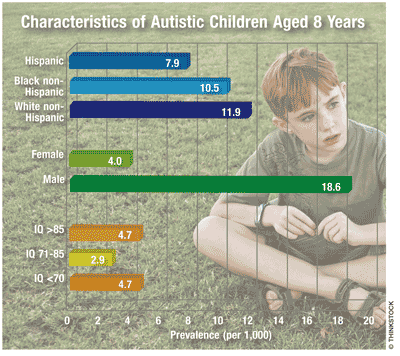
ADDM Findings: The ADDM Network monitors just 14 states, which is a major limitation to generalizing findings. In 2008, 11.3 of 1,000 children aged 8 years had an ASD; significantly more boys (1 in 54) than girls (1 in 252) were affected. Non-Hispanic white children (11.9 per 1,000) were significantly more affected than non-Hispanic black children (10.2 per 1,000) and Hispanic children (7.9 per 1,000). From 2006 to 2008, ASD prevalence increased 23% (from 9 per 1,000 to 11 per 1,000); the percentage increase was similar between boys (23%) and girls (22%). Changes in ASD prevalence from 2006 to 2008 varied by race, but all increases were significant. There was a 16% increase in prevalence among non-Hispanic white children (from 10 to 11.5 per 1,000), a 42% increase among non-Hispanic black children (from 7 to 10 per 1,000), and a 29% increase among Hispanic children (from 6.1 to 7.9 per 1,000). The largest increase was in non-Hispanic black children. Across ethnic groups, the gap in prevalence seems to have narrowed over time.
Special-Education Services: Conditions under which special-education services were received in public schools showed considerable variation. Autism was the most frequent category (60%), followed by health or physical disability (8.57%), intellectual disability (7.12%), speech and language impairment (7%), and specific learning impairment (6.67%). Developmental delay/preschool, emotional disturbance, hearing/visual impairment, and multiple disabilities categories were each less than 5%.
Intellectual Ability: Children who met inclusion criteria for ASDs showed an uneven distribution in ability. An equal proportion of ASD children aged 8 years had an IQ score above 85 or a score of 70 or less, while fewer ASD children had IQ scores between 71 and 85. Forty-six percent of girls with ASDs had IQ scores indicating intellectual disability, compared with 37% of boys.
To comment on this article, contact rdavidson@uspharmacist.com.